Propeller Welding Repair: Building A Solid Defense For Marine Power
May 04, 2026
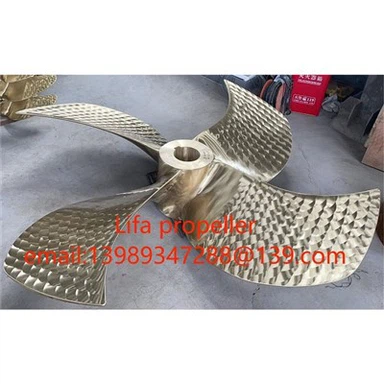
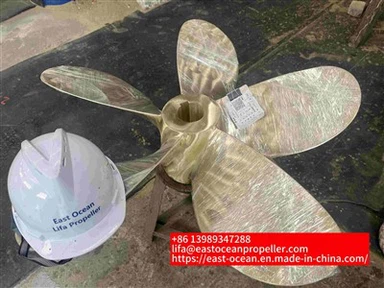
In the workshop of EAST OCEAN Heavy Industry, a large marine propeller lies still on the ground. A worker holds a welding torch, focusing on the repair work along the blade edges. Sparks burst forth in the workshop, and the arc light reflects on the worker's concentrated face. This seemingly ordinary welding operation is actually a critical process to ensure the reliable operation of the ship's power system.
Long-term immersed in seawater, marine propellers not only endure tremendous hydrodynamic impact but also face multiple challenges such as cavitation erosion and sediment wear. Even minor defects on the blade edges can gradually expand during long voyages, reducing propulsion efficiency and even threatening the ship's navigation safety. Welding repair is an essential method to address these issues and extend the service life of the propeller.
Welding repair is far from a simple joining process; it is an extreme test of process precision. Before operation, workers conduct comprehensive flaw detection on the propeller blades to accurately locate areas of wear, cracks, or corrosion, then clean the oxide layers and impurities in the defective area to create a clean base metal surface for welding. During welding, workers must strictly control current, voltage, and welding speed, using welding materials matching the copper alloy base metal of the propeller to avoid blade deformation caused by uneven welding heat input. They also ensure stable metallographic structure in the welded area to prevent subsequent cracking or detachment risks.
After welding, the repaired area is ground and shaped to restore the original contour and curved surface of the blade, ensuring the propeller's hydrodynamic performance remains unaffected. Subsequent processes such as penetrant testing and dimensional re-inspection verify the welding quality, guaranteeing that every weld is dense and defect-free, fully complying with classification society standards.
For ships, the propeller is the core component of power transmission, and its stable operation is directly related to navigation safety and operational efficiency. Every precise welding repair is like "healing" the ship's power heart, giving worn blades a new lease on life and adding peace of mind to every voyage. This seemingly ordinary workshop welding work embodies responsibility for ship safety and dedication to craftsmanship, forging a solid defense line for countless ships' long voyages.