

What is Marine Fixed Blades Propeller
A marine fixed-bladed propeller, also known as a fixed pitch propeller, is a type of propeller used in boats and ships that has blades that are fixed in position and cannot be adjusted while the vessel is in operation. The blades are typically made of metal and are attached to a hub that rotates around the propeller shaft in order to generate forward thrust that propels the vessel through the water. Fixed-bladed propellers are commonly used in larger boats and ships, as they are more durable and require less maintenance than variable pitch or controllable pitch propellers. However, they may not be as efficient as other types of propellers in certain operating conditions, such as when the vessel needs to operate at different speeds or in different water conditions.
Advantages of Marine Fixed Blades Propeller
High efficiency and performance
Fixed blade propellers are designed to achieve high levels of performance, fuel efficiency, and thrust.
Durability
Marine fixed blade propellers are built to withstand harsh saltwater environments, corrosion, and wear and tear.
Minimal maintenance
Unlike other types of propellers, fixed blade propellers require less maintenance because they do not have moving parts that can wear out or break.
Good speed control
Fixed blade propellers provide good speed control and can be easily adjusted to fine-tune performance.
Maneuverability
Fixed blade propellers are highly maneuverable, allowing boats to move easily in tight spaces or around obstacles.
Cost-effective
Fixed blade propellers are generally more cost-effective than other types of propellers, making them a popular choice for many boat owners.
-
![Lifa Marine Propeller 4-Blades A Quality Cu3 For Boats Ships Vessels]()
-
![Lifa Marine Propeller Cu3 High-speed For Boats Ships]()
Lifa Marine Propeller Cu3 High-speed For Boats Ships
Add to Inquiry -
![Lifa Marine Propeller Cu3 Alloy High-speed For Boats Ships]()
Lifa Marine Propeller Cu3 Alloy High-speed For Boats Ships
Add to Inquiry -
![Lifa Marine Propeller Nickel-Aluminum Bronze Alloy High-speed For Boats Ships]()
-
![Lifa Heavy Duty Bronze Alloy Marine Propeller For Vessels]()
Lifa Heavy Duty Bronze Alloy Marine Propeller For Vessels
Add to Inquiry -
![Lifa Highspeed Bronze Alloy Marine Propeller For Vessels]()
Lifa Highspeed Bronze Alloy Marine Propeller For Vessels
Add to Inquiry -
![Lifa Heavyduty Aluminum Nickel Bronze Alloy Marine Propeller For Tugboats]()
-
![Lifa Heavyduty Nickel-Aluminum Bronze Alloy Marine Propeller For Tugboat Shipyard]()
-
![Lifa Heavy Duty Nickel-Aluminum Bronze Alloy Marine Propeller For Tugboat Shipyard]()
-
![Lifa Heavy Duty Nickel-Aluminum Bronze Marine Propeller For Tugboat Shipyard]()
-
![Lifa Nickel-Aluminum Bronze Alloy Marine Propeller Boss Cap Fin For Vessel Craft Tugboat]()
-
![Lifa Bronze Alloy Marine Propeller Boss Cap Fin For Vessel Craft Tugboat]()


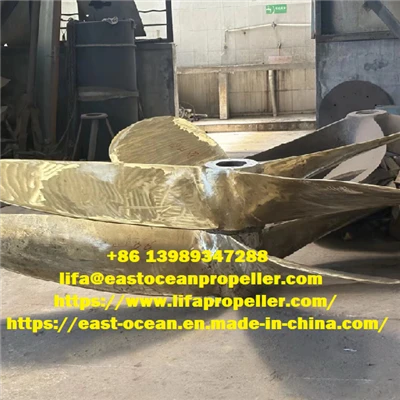
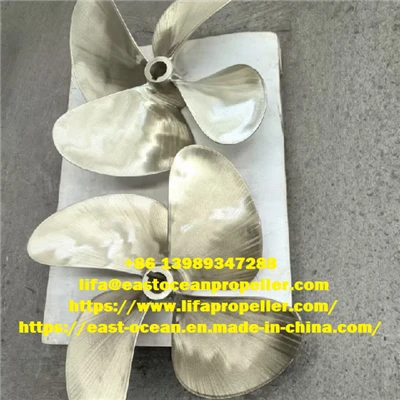
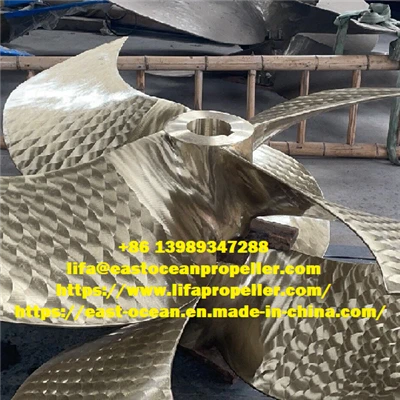
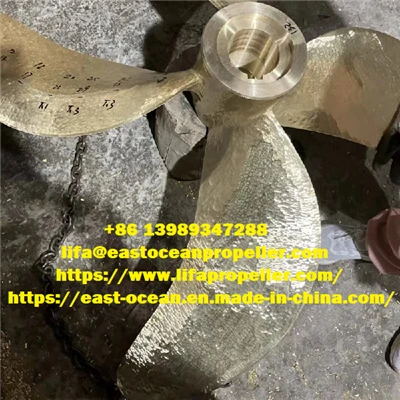


Why choose us
Quality: Lifa Propeller is a highly trusted and reliable brand within the propeller industry. They take pride in their quality products and ensure that all of their propellers are made with high-quality materials and engineering.
Innovation: Lifa Propeller is continuously innovating and developing new technologies to improve the performance of their products. This makes them the top choice for anyone looking for the latest propeller designs and technologies.
Expertise: With over 50 years of experience in the propeller industry, Lifa Propeller has established themselves as experts in their field. Their team of professionals has the knowledge and experience to provide the best advice and support to their customers.
Customization: Lifa Propeller offers customized propeller solutions to meet the specific needs of their customers. They understand that different boats and applications require different propellers, and they work closely with their customers to find the perfect solution.
Customer Support: Lifa Propeller has an excellent customer support team that is always ready to assist their customers with any questions or concerns they may have. They are committed to providing top-notch customer service and ensuring customer satisfaction.
Fixed-pitch Marine Propeller Geometry Design


A basic mechanism of a marine propeller is to match with the engine’s output, shaft speed and its operating performance with physical size or load of the vessel . Evolution of marine propeller being widely used in the market recently was the invention of Robert Hooke in the watermill design principle . The marine propeller usually consists of fixed type or controllable type of pitch propeller.
Controllable pitch propeller is a complicated and expensive design with mechanical mechanism that allows forward and backward movement of ship with a very flexible pitch adjustment along its operation depending on the loading capacity and speed required. On the other hand, fixed pitch propeller is very common in the market due to its simplicity of mechanism joint, extensive use with variety of size, range and most importantly, cheaper in price. Also, fixed pitch propeller is easier to operate and analyse due to its fixed geometry that makes it the more popular type of propeller among researchers.
Engineering analysis and design of marine propeller’s blade profile is critical as it will directly affect the production of flow pattern in each sweep of rotational motion. Also, marine propeller blades suffered from interferences which are caused by miscellaneous elements such as damages, wear and tear on its solid body that will then influenced the efficiency and its flow pattern. Effects that created by these unwanted properties are known as erosion, vibration, noise and cavitations .
Increasing in efficiency and reduction in cavitation, noise and vibration with lower energy require to operate the propulsion system is the current trend being investigated by most researchers. Marine propeller design in patterning the hydrofoil shape and hydrodynamics performance in non-uniform flow is the most common and important analysis which become an interest of researchers to predict the optimum ability of the propeller. Preliminary design may provide some constraints on the principle dimensions, parameters and conditions for incoming stages of analysis.
FPP - Long-haul Propulsion at the Lowest Operational costs
Tailored FP propeller designs with bolted replaceable blades or bolted adjustable blades can be offered for special high ice class ship and propulsion applications. Bolted blades offer the option of exchangeability without docking the vessel and bolted adjustable blades make it possible to adjust the ‘fixed’ pitch setting. Furthermore, a new-generation FP propeller with flanged hub/shaft connection is available. Shaft line systems with tail shafts, intermediate shafts, bearings, shaft alternators, and couplings are always customized and optimized to the individual powertrain and ship

Characteristics
FPPs are ideal for ships where the highest efficiency and sturdy simplicity take top priority. They are the obvious choice for ocean-going vessels involving straightforward propulsion plants and operational patterns with long-haul sailing at service speeds at or around the propeller design and layout point, close to or precisely at the maximum propulsive efficiency. Straightforward FPPs are, however, also specified for smaller yachts and workboats.
Benefits
Lowest TCO (total cost ownership): Operational savings are ensured by a highly efficient design with few wearing parts – robustly designed for high reliability and longevity
Minimum fuel consumption and emission levels: Maximized propeller efficiency ensures reduced fuel consumption and a reduction in the exhaust gas emission levels
Efficiency optimized by design: The superior efficiency from the streamlined and smallest hub dia./propeller dia. ratio is exploited with respect to controlled cavitation, pressure pulses, and noise.

Signs You Should Replace Your Boat Propeller
With a properly sized propeller, a boat will run at its peak efficiency with the greatest crew comfort and minimal wear on the boat’s systems and components. However, if the propeller starts to show evidence of damage or the mission of the boat changes, a propeller replacement may be necessary. Here are some signs you should replace your boat propeller.
Strange vibrations
Boats operating in harsh environments or shallow water are more susceptible to propeller damage. In these conditions, captains should be keenly aware of the possibility of propeller damage. Thus, they must exercise extreme caution and well-chosen best practices to mitigate damaging the more delicate components such as propellers, shafts, and rudders.
In the event of a grounding or a hard strike on something beneath the water’s surface, you might feel an unfamiliar vibration throughout your vessel that isn’t typical. In many cases, this unfamiliar vibration matches the rotational rate of the shaft, which you can confirm if the frequency of the vibration increases along with the speed of the engine. Although this may not have a direct effect on the speed of the vessel, the vibration can damage other components on the vessel and diminish the comfort and safe operation of the boat.
Performance changes
If there are no strange vibrations, but the performance of the boat has changed, propeller damage may still be the culprit. Possible signs you should replace your boat propeller may include changes such as diminished speed in pleasure craft or diminished thrust in larger ships using Kaplan propellers. When a grounding or strike occurs, you should take your boat out of service to check for damage to the underwater gear. If the boat is too large to trailer, you will either need to dry dock it or have underwater divers inspect it to determine the extent of the damage. Once they assess the damage, you can decide whether to repair or replace the equipment.
Costly repairs
In cases where the damage is slight, an experienced propeller repair shop can bring the propeller back to the manufacturer’s specifications. These jobs typically include straightening bent and dinged blades, but in cases where repair is either not possible or too costly, the customer will opt to replace the propeller. If the boat was performing correctly before the damage, professionals typically replace the propeller with a propeller of the same specification. Otherwise, you can ask repair shops to replace the propeller with the most optimal size for your vessel. If your boat undergoes a repower with greater horsepower, boat owners will install a propeller to absorb the additional power than the one they’re replacing.
Factors That Affect Boat Propellers
When it comes to the overall performance of a vessel, there are almost limitless factors that come into play. The power that has been installed in the boat is one of the biggest factors, but other elements can include the loading of the vessel, temperature, sea conditions, and the handling of the boat by the captain. We’ll focus on some of the controllable factors that affect boat propellers

Engines and powertrains
The boat’s powertrain is probably the number one factor affecting its performance. The powertrain is generally composed of the engine and the transmission. Since there is no average boat in the context of this discussion, we will look at a very common commercial application - the 2,000-horsepower push boat. These boats are used in nearshore applications, moving barges loaded with materials, such as coal, aggregate, or grains.
The example push boat is designed to move large, heavy loads at a relatively slow speed to maintain efficiency. In the case of the 2,000-horsepower boat, it will have two 1,000 horsepower engines, each backed by a transmission with a reduction gear. The engine’s operating RPM range, transmission, and inboard boat propellers all must match to achieve optimal performance for the boat. An engineer will typically make the propeller recommendation to achieve this optimal state.
Vibration and noise
Other factors that affect boat propellers within the boat’s design influence the overall performance of the boat, including vibration and noise. These are very important things to consider with regard to crew comfort and the lifespan of the equipment. Certain features of the hull design - such as the use of tunnels - affect the performance of the boat if they cause excessive vibrating and noise. In many cases, hull designs that manifest problems such as vibration or noise can be mitigated using carefully designed propellers.


Propeller integrity
The condition of the propellers is another important factor when it comes to the boat’s performance. Propeller damage from grounding and striking submerged objects can vastly affect the performance of the boat, impacting its speed, efficiency, and vibration. Once the blades on a propeller have been altered, the balance of the propeller will be off. This causes vibration, which can be so severe that it drastically reduces the lifespan of other components of the boat. When this happens, most owners will dry dock the boat, remove the propellers, and either repair or replace them.
When it comes to the propeller itself, controllable pitch propellers are still much more complicated due to the very precise machining of the hub and propeller blade interfaces. Most fixed pitch propellers are a monobloc casting, meaning the entire propeller is cast in one pour, then finished to its final dimensions. Controllable pitch propellers, in comparison, are made up of a separate casting for each blade and the hub. The hub has internal components that are also of a very tight tolerance to provide a long service life. All this machining and special equipment is more expensive in comparison to the simple nature of a fixed pitch propeller.
Now that you know the differences between fixed pitch propellers versus controllable pitch propellers, you can make an informed decision regarding which one is worth your investment.
Understanding Boat Propeller Pitch
All commercial marine propellers take into consideration two basic dimensions: diameter and pitch. Most propellers feature these measurements on their surfaces and present them as the diameter measurement x the pitch measurement. Diameter is simply how large of a circle the propellers make as they rotate, from the tip of one blade to the tip of the blade opposite of it. Understanding boat propeller pitch, however, is a bit more complex
Identifying the pitch
The propeller’s pitch is the number of inches the propeller moves forward in a single rotation while moving through a soft solid. So, for instance, a 17-inch propeller would move 17 inches every time the propeller makes a full rotation. For boaters, the best comparison may be that of a car’s axle ratio. The lower the ratio, the easier it’ll be to accelerate and get moving after starting from a stopped position. However, this comes with the price of a lower maximum speed because your propeller reaches its maximum number of rotations per minute quicker. Higher pitch propellers do the opposite in that you’ll see a greater top speed but a slower acceleration time.
Selecting a propeller
Another aspect of understanding boat propeller pitch is the pitch’s effect on the boat’s engine. Picking the incorrect pitch will put extra stress on the engine. You’ll eventually wear it down, which will either necessitate costly repairs or kill your vessel outright.
You can’t go wrong if you replace your propeller with one that is the same exact model. But if you’re looking for optimization, you should speak with professionals at any qualified dealer or marina that will have an understanding of what pitch is most appropriate for your vessel’s engine. If you’re shopping for a propeller on your own, take into account your boat’s engine, how much horsepower it has, the boat’s weight, and the hull style. Reference your owner’s manual for the finer details.
Our Factory
ZHOUSHAN EAST OCEAN PROPELLER MAKING CO.,LTD. has passed the China CCS and TUV she ISO quality management system certification, and through the ABS, BV, China CCS, Norway DNV, LR, recognition of plant classification. The company also has obtained the honors of "National Hi-tech Enterprise", "small and medium-sized technology-based enterprise" and etc


certificate

FAQ
Q: What is a fixed blade propeller?
Q: What are the advantages of a fixed propeller?
●Optimal performance and efficiency, while minimizing noise and vibration levels.
●Improved vessel EEDI/EEOI.
●Tailor-made designs using the latest available technology.
●Excellent hydrodynamic guidance.
●Fixed pitch propulsion solutions for all power levels.
Q: What is the difference between a controllable fixed pitch propeller and a fixed pitch propeller?
Q: What is the difference between a fixed and variable pitch propeller?
Q: What are fixed blades used for?
Q: What are the cons of fixed pitch propellers?
Q: Which type of propeller is most efficient?
Q: What is the difference between constant and fixed propeller?
Q: What kind of propeller gives more efficiency?
Q: What is the purpose of a fixed pitch propeller?
Q: What type of propeller is more efficient than a fixed pitch propeller?
A constant speed prop varies its blade pitch from fine pitch at lower speeds to a courser pitch at higher speeds, without the engine rpm needing to change. So the engine and prop can both work more efficiently.
Q: Is the variable pitch propeller still used today?
Q: What kind of propeller are most ships equipped with?
Introduction. A propeller is a fan like rotating structure generally at the aft of a ship imparting thrust to propel the ship. Most ships use the conventional screw propeller.
Q: Do fixed pitch propellers have a governor?
In the case of a fixed-pitch propeller, the torque absorbed by the propeller is a function of speed, or r.p.m. The governor, in most cases, is geared to the engine crankshaft and thus is sensitive to changes in engine r.p.m.
Q: What is the best angle for a fixed blade?
In fact, a 20 degrees angle is often considered the best sharing point for most knives. It is our experience that kitchen knives sharpened to 17 to 20 degrees cut very well and are still durable. For pocket or outdoor knives, a 20 degree angle would be on the low side of ideal.
Q: What are the four types of blades?
Q: Which is better a 3 or 4 blade prop?
A 3-blade propeller, being more efficient at higher speeds, might not offer the same low-speed control as a 4-blade propeller. The 4-blade design, with its improved low-speed acceleration and responsiveness, allows for more precise control of trolling speed.
Q: What are the quiet propellers for boats?
Q: What is feathering propeller?
Q: Is a constant speed propeller the same as a feathering propeller?
We're professional marine fixed blades propeller manufacturers and suppliers in China, featured by quality products and good service. Please rest assured to buy customized marine fixed blades propeller at competitive price from our factory. Contact us for more details.
