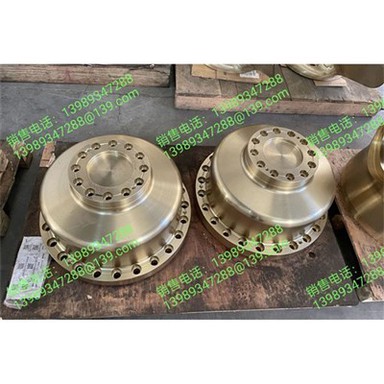
LIFA Factory Shooting: Propeller Static Balance Correction Process
Jun 12, 2026
At LIFA Propeller Manufacturing Factory, every marine propeller will undergo the core finishing process of static balance correction after casting and machining. As an indispensable and crucial procedure in our production process, it directly determines the operational stability and service life of propellers, as well as the navigation safety of ships, serving as a key step in product quality control.

Many people assume that propellers can be delivered immediately after forming. However, subtle errors are inevitable during bronze casting and grinding, resulting in uneven weight distribution among propeller blades. Seemingly trivial weight deviations will generate huge unbalanced centrifugal forces when the propellers rotate continuously during high-speed ship navigation. This leads to problems such as hull vibration, increased navigation noise and reduced propulsion efficiency. Long-term operation will also wear out supporting equipment including ship shafts and bearings, greatly raising ship operation and maintenance costs. Therefore, precise static balance correction is the foundation of eliminating potential navigation risks.

Our factory adopts the traditional yet accurate bracket-type static balance detection technology. The finished and machined propeller is stably mounted on a low-resistance balance bracket. A gentle push on the blades enables the propeller to rotate freely. Affected by gravity, the heavier blade will sink naturally and stay at the lowest position, accurately revealing the deviation of the center of gravity.
Our highly skilled technicians polish the edges and surfaces of overweight blades with professional grinding equipment to remove excess material little by little. Instead of one-time grinding, we adhere to the principle of minimal grinding and repeated testing. Technicians test the propeller by rotating it again after each grinding, conducting repeated correction and adjustment.
The static balance procedure is qualified only when the propeller can stay stably at any angle on the bracket without fixed sinking. Compared with automatic equipment detection, our refined manual correction is more adaptable to marine propellers of various specifications and working conditions. It can precisely control tiny errors to meet the usage requirements of various civil and industrial ships.
Static balance is the first guarantee for the stable operation of propellers and a reflection of LIFA's persistent pursuit of quality. Adhering to the concept of exquisite manufacturing, we never overlook any process flaw. With strict correction standards, we deliver high-stability, high-efficiency and high-durability premium propeller products for all customers.