

Nickel-Aluminum Bronze Casting Process Of LIFA Marine Propellers
Jun 16, 2026
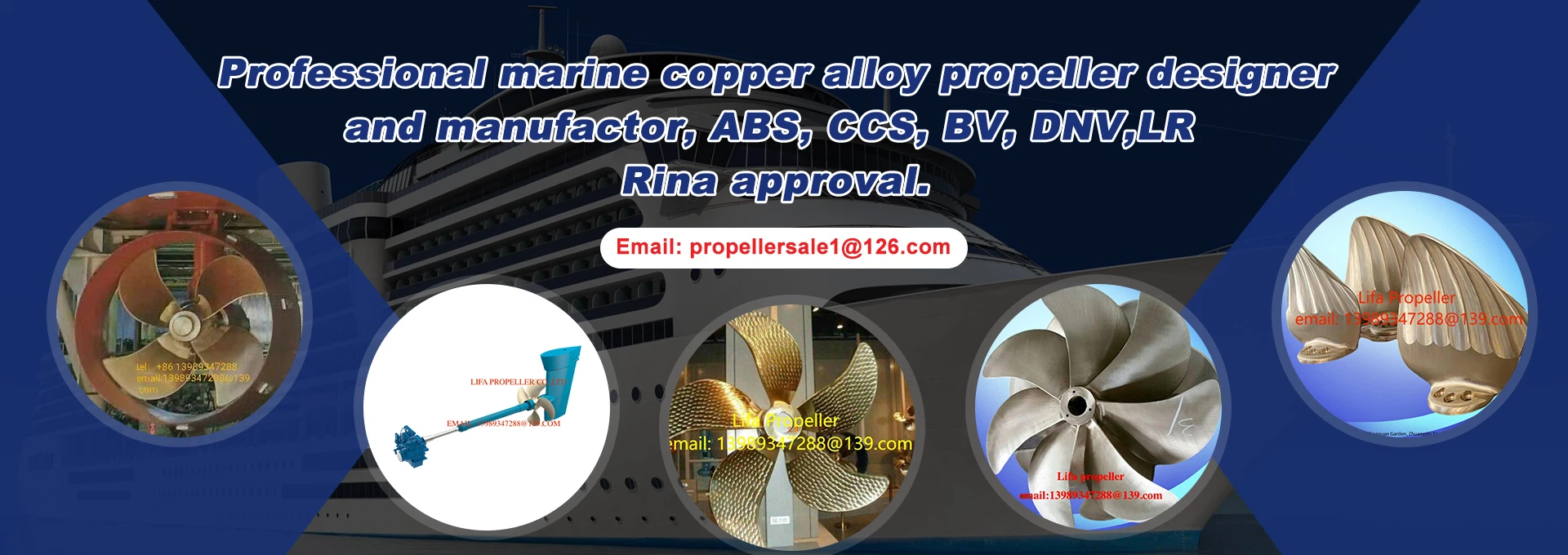
At LIFA Propeller Manufacturing Factory, the integral casting procedure serves as the most foundational and decisive forming process for marine propellers, laying the core foundation for the structural strength, compactness and corrosion resistance of each finished propeller product. Every nickel-aluminum bronze propeller is shaped through rigorous high-temperature melting and precision pouring, which directly determines the internal metallurgical quality of the workpiece and fundamentally affects the service life and navigation safety of ships.
Many customers only focus on the appearance and machining precision of finished propellers, ignoring the vital influence of casting technology on product performance. During the high-temperature smelting of nickel-aluminum bronze, improper temperature control, unclean raw material purification or irregular pouring operation will easily lead to internal defects such as porosity, shrinkage cavities, slag inclusion and loose structure inside the propeller hub and blade roots. These hidden defects cannot be completely eliminated by later machining, and will gradually expand under long-term seawater corrosion, cavitation impact and cyclic alternating stress, triggering blade fracture, accelerated wear and other serious failures, bringing huge hidden dangers to ship navigation and high-cost maintenance losses. Therefore, standardized high-temperature smelting and stable pouring operation are the primary guarantee for manufacturing high-performance marine propellers.

Our factory strictly follows marine-grade casting specifications for nickel-aluminum bronze raw materials. Before melting, workers carry out strict sorting and surface cleaning of all alloy raw materials to remove rust, oil stains and sundries, and configure the alloy proportion accurately in accordance with the designated formula. The raw materials are put into the intermediate frequency melting furnace for high-temperature heating and melting, and professional operators keep real-time track of the molten alloy temperature, conduct deoxidation, slag removal and refining treatment repeatedly to ensure the molten bronze has uniform texture, low impurity content and excellent fluidity, fully meeting the strict requirements of marine casting.
When the molten alloy reaches the optimal pouring temperature, multiple skilled workers cooperate closely to complete the whole pouring operation. Workers wear high-temperature protective equipment to steadily lift the ladle, slowly and continuously pour the high-temperature molten nickel-aluminum bronze into the pre-made sand mold cavity. We control the pouring speed stably throughout the whole process to avoid turbulent flow and splashing of molten liquid, effectively prevent gas entrainment and slag involvement. After pouring is completed, the workpiece is placed in the workshop for natural slow cooling according to the specified process, which can effectively release internal casting stress and avoid crack deformation caused by rapid temperature drop.
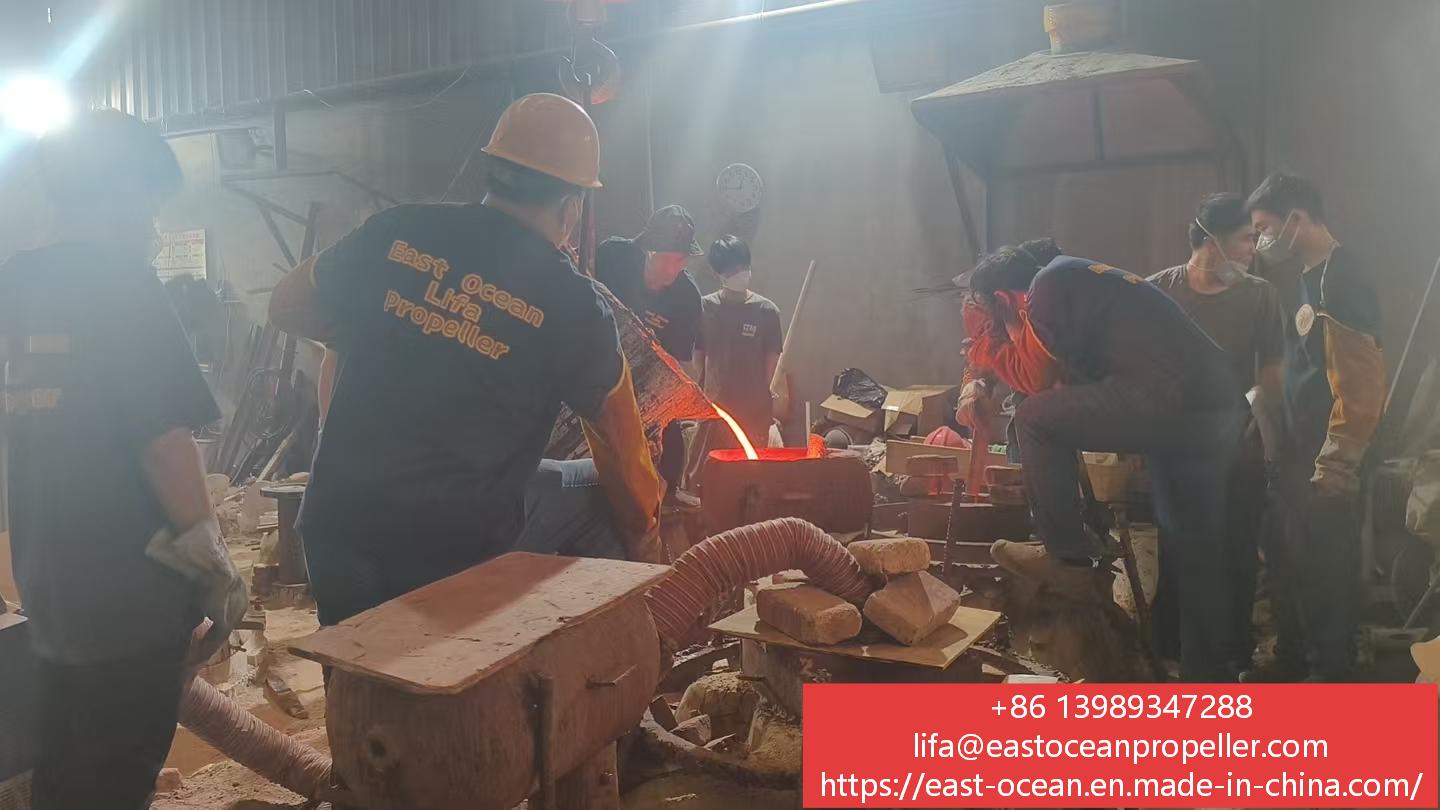
The casting process is only recognized as qualified after the propeller blank is fully cooled, stripped from the sand mold and subjected to preliminary visual inspection to exclude obvious surface cracks, large-area sand sticking and serious shrinkage defects. Compared with small-scale rough casting, our standardized cooperative pouring and precise smelting technology can produce compact, low-defect propeller blanks applicable to various tonnage fishing boats, cargo ships and marine engineering vessels, fully satisfying the harsh service conditions of long-term offshore navigation.
High-temperature pouring casting is the first barrier to ensure the solid internal structure of propellers, and also embodies LIFA's persistent adherence to high-standard craftsmanship. Adhering to lean production management, we strictly standardize every operation link from raw material batching, high-temperature smelting to cooperative pouring and stress relief cooling. With rigorous casting process specifications, we provide global customers with high-quality nickel-aluminum bronze propeller blanks featuring dense internal texture, strong structural toughness and outstanding seawater corrosion resistance.
You Might Also Like
-

Marine VIP PVC Aluminum Comfortable Passenger Seat With A...
-

Marine VIP PVC Aluminum Passenger Seat With Arm Case And ...
-

Marine Grade Steel Corrosion Resistant Customized Waterti...
-
Marine Hardware Handwheel Operate Light Duty Aluminum Rai...
-
Marine GS Standard Watertight Window For Yacht Boat Shipp...
-

Lifa Customized Bronze Alloy Marine Propeller Boss Cap Fi...