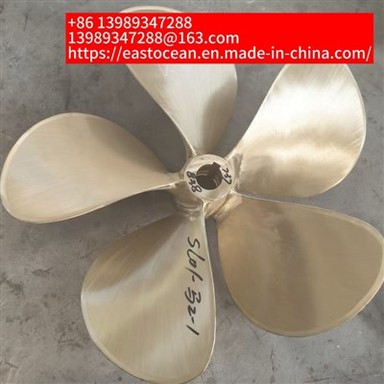
What is the difference between propeller ship and ordinary propeller ship?
Feb 12, 2023
Once people stop rowing, ordinary paddle boats need people to paddle from time to time to push the boat forward. The ship will naturally stop. However, human power is limited after all. The speed of the ship is limited by human power. But the propeller ship is quite different. It has a secret weapon - engine. The thrust formed by the rotation of the engine pushes the propeller blades to rotate from time to time, and the rotation of the blades pushes the ship forward. People just need to ensure the rotation of the engine. As long as the power is guaranteed, the engine can continuously rotate at high speed, and then rotate from time to time, which is much more powerful than human power!
The liquid level in the oil tank is adjusted according to the water pressure obtained by the sensor. There is a pipeline inside the hull connected with an oil tank on the ship. Make the seal oil pressure in the oil seal equal to the external water pressure. So as to achieve pressure balance and prevent water from seeping through the tail shaft. It is not clear how the submarine is sealed. The basic principle should be similar. However, it is estimated that the pressure of the oil tank may not be adjusted by the height of the liquid level. Because the submarine has a large submergence depth and the pressure generated by gravity alone is not enough, it should be adjusted by an oil pressure device.
The higher the speed of the ship's propeller, the higher the speed. The greater the thrust, the faster the speed. However, when the propeller exceeds the Z optimum speed, because the water around it can't flow in time when it rotates, it will produce "cavitation" phenomenon. Therefore, the thrust will be reduced, and the ship will run slower. The Z optimum speed of the general civil ship is more than 300 revolutions per minute, and the Z depression speed of the warship is less than 600 revolutions per minute.
Improve the working efficiency of stern propeller and rudder. Generally, proper stern inclination can reduce the up-wave on the front deck due to certain stern inclination. The stern inclination value of ocean-going ship is between 0.9 and 1.9 meters when it is empty and 0.3 and 0.5 meters when it is full. Some high-speed ships have a slight camber when they are stationary, but they can maintain the stern inclination after sailing, meeting the requirements of the above stern inclination.
For example, reddish-brown refers to steam pipe, and various pipes on the ship are painted with different colors to identify the nature of gas or liquid flowing in the pipe. Brown represents fuel pipe, blue represents gas pipe, light blue represents air pipe, yellow represents lubricating oil pipe, green represents consumption water pipe, black represents sewage pipe and waste steam pipe, etc.